
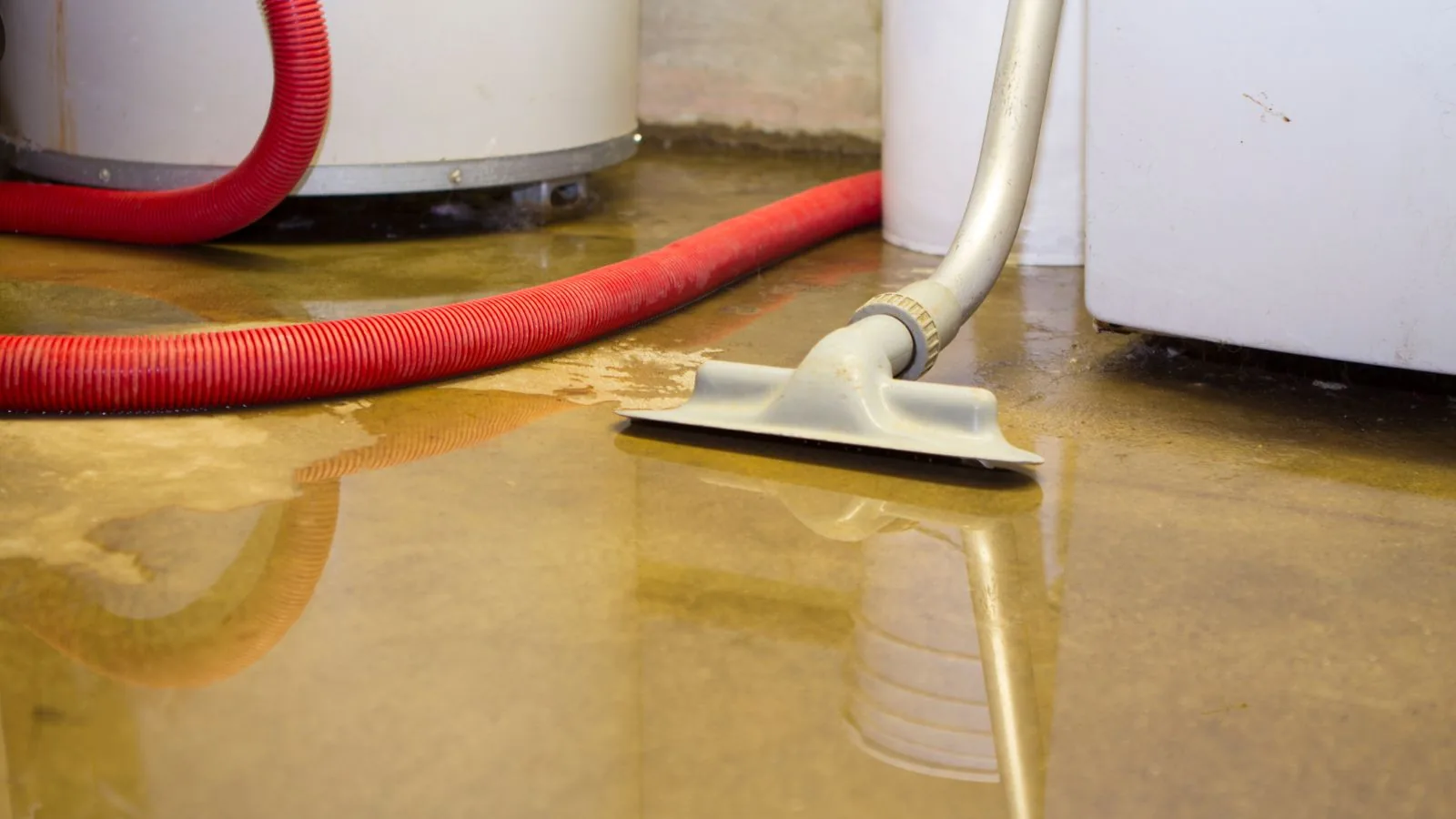
An appliance is flooding: what to do right now
If a washer, dishwasher or refrigerator line is leaking, shut off the valve behind the appliance, unplug it only if the cord and floor are dry, and call our 24/7 line. Keep out of standing water that touches outlets.
These leaks tend to be clean water at first, which is the easiest category to dry. They grow expensive when they run for hours, such as overnight or while you are at work.
Appliances leak on weekends and at night too, so we treat those calls as normal. Same-day response is what we work toward when crews are available, and the person on the phone will tell you what to expect.
Which appliances cause most leaks
| Appliance | Common failure | Where water goes |
|---|---|---|
| Washing machine | Burst or loose supply hose, clogged drain | Laundry floor, wall bottoms, ceiling below. |
| Dishwasher | Door gasket, inlet valve or drain line | Under the cabinet and into kitchen flooring. |
| Refrigerator | Ice maker supply line | Behind the unit and under hardwood or vinyl. |
| Utility sink or humidifier | Disconnected hose or overflow | Basement floor and nearby walls. |
Water from appliances moves out of sight
Flooring that looks fine can hide a wet subfloor, especially under vinyl and hardwood. Water can travel under cabinets and along the wall base to the next room.
We use moisture meters and thermal imaging to follow it. That is why a quick wipe up is not enough, because a damp subfloor can cup flooring and loosen adhesives weeks later.
What we do after an appliance leak
Pull the appliance
If needed we move it out so we can reach the wet floor and wall base.
Extract and open up
We remove standing water and lift pad or toe kicks so air can reach wet areas.
Dry
Air movers and a dehumidifier run while we record moisture readings.
Repair
Flooring, baseboard or cabinet sections are replaced if drying does not bring them back.
Prevention that actually helps
Braided steel hoses hold up better than old rubber ones, and replacing hoses on a schedule is cheap compared with a flood. Leak sensors under the washer or fridge can alert your phone, and shutting valves off when you travel is a simple habit.
Many homeowners never check these valves until a leak, so find yours now and make sure they turn.
What to record for your insurer
Take photos of the appliance, the hose or valve that failed and the wet floor. Note the brand, model and age if you can find them, and keep the failed part in a bag.
Write down when you noticed the leak and when you shut the water off. Those details help your insurer understand whether the event was sudden.
What the S500 standard says about appliance leaks
The ANSI/IICRC S500 standard is the published reference for water damage restoration, and it sorts water by source and by how far it spread. A supply line failure counts differently from a dishwasher drain that carried food waste.
We cite the standard as the industry guide our process follows. It is not a claim that we hold any certification, and it never replaces what your meter readings show on the day.
What affects the cost
Cost factors
The main factors are the amount of water, the flooring type, whether it reached a basement or a lower floor and how long it sat. A quick catch on tile costs far less than an overnight leak over wood.
We explain scope and price before work starts.
Insurance and related services
Policies often cover a sudden appliance failure but not gradual seepage, so describe the event to your insurer as water damage and keep the failed part. For kitchen sources see kitchen water damage restoration, and for the drying step see structural drying.
Questions people ask
Yes. The 24/7 line is open on nights, weekends and holidays. Call, tell us which appliance failed and we will explain the first steps.
Only if the cord and the floor around it are dry. If water is near the outlet, leave it and call your electrician or us, and shut off power at the panel if you can reach it safely.
It can. Upper floor laundry leaks often soak the ceiling underneath, so we check there and tell you what we find.
Supply water is clean at first, but drain overflow can carry soap and soil. We treat the category as part of the job and explain our approach.
Often yes if drying starts quickly. Hardwood and laminate are more sensitive than tile, and we check the subfloor before deciding.