
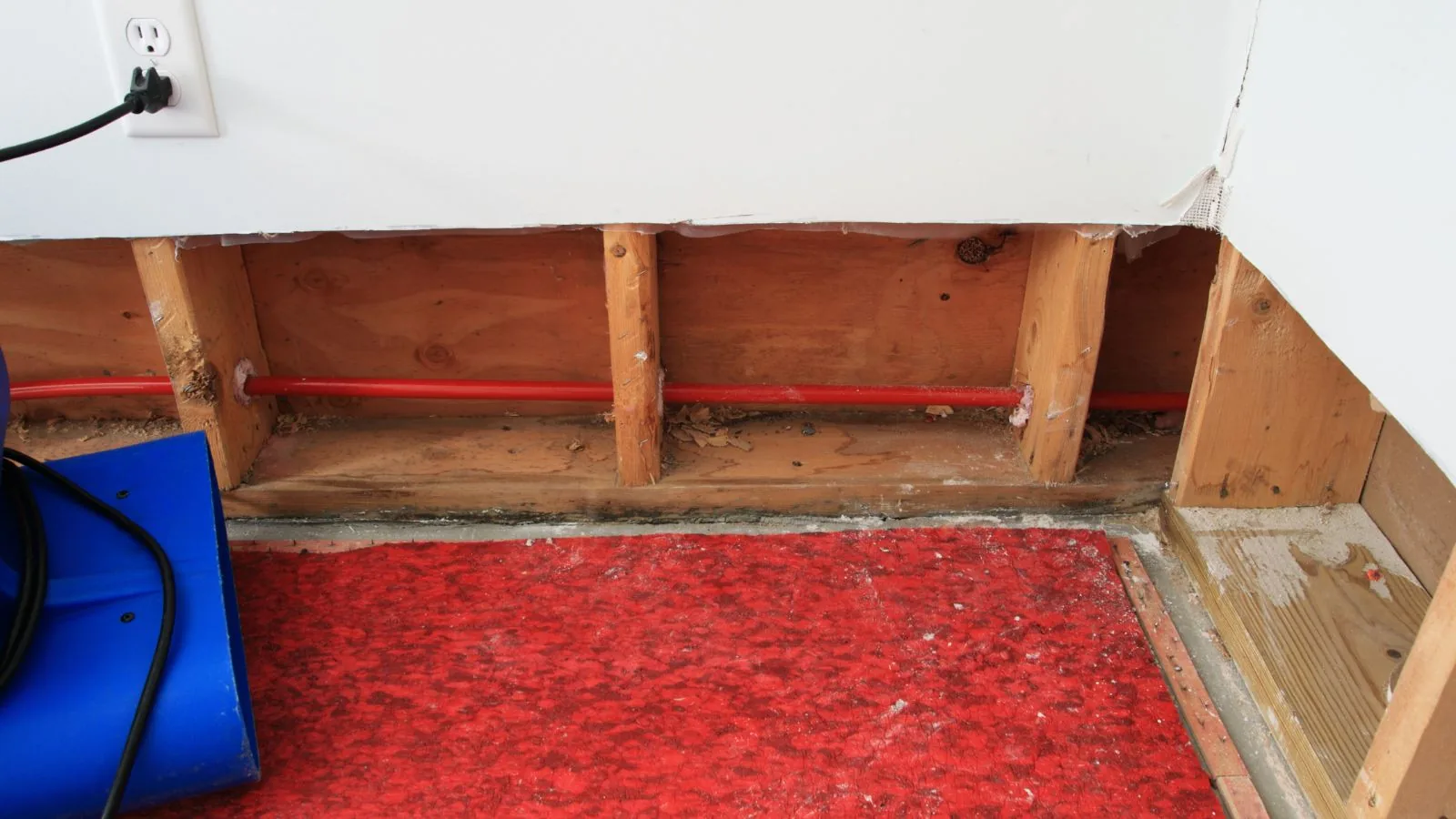
Carpet and pad are two different problems
Carpet is the visible surface, and the pad underneath is what holds most of the water. A pad acts like a sponge, so the carpet can feel only damp while the pad stays soaked.
That is why the decision is usually made on the pad and the water source, not on how the top of the carpet feels.
Save it or replace it
| Situation | Typical outcome |
|---|---|
| Clean water, caught within a day | Carpet and pad often dried in place or lifted and dried. |
| Clean water, sat several days | Pad replaced, carpet possibly saved. |
| Gray water from a washer or dishwasher | Pad replaced, carpet cleaned or replaced. |
| Sewage or floodwater | Carpet and pad usually removed. |
What we do with wet carpet
Extract
Truck-mounted or portable extractors pull water out of fibers and pad.
Lift and float
We lift the carpet at the edges so air can reach the pad and subfloor.
Dry
Air movers and dehumidifiers dry the carpet, pad and subfloor, and we measure the result.
Clean or replace
Saved carpet is cleaned and reinstalled, and damaged pad and carpet are replaced.
The subfloor under the carpet
Pad and carpet can be replaced, but a wet subfloor needs to be dry before anything goes back. Otherwise moisture is sealed in and can lead to odor and damage later.
On concrete, we check whether the water is rising from below. If so, see slab leak water damage and basement water damage cleanup.
Mistakes that make wet carpet worse
Most carpet that is lost could have been saved if a few common mistakes were avoided in the first day. These are the ones we see most when we walk into a room.
- Running a household vacuum on wet carpet, which can shock the motor and spread water.
- Walking on soaked carpet, which pushes water deeper into the pad and the subfloor.
- Leaving furniture legs on wet carpet, which leaves rust and dye stains that do not come out.
- Turning the heat up high, which can speed up odor before the pad is dry.
- Waiting to see if it dries by itself, which gives the pad days to hold water against the floor.
Stairs, bedrooms and wall to wall installs
Wall to wall carpet is tacked down at the edges, so we release it at a corner and fold it back to reach the pad. On stairs the carpet is wrapped around each tread, which makes it harder to lift, and we often dry stairs in place with directed airflow.
Bedrooms with closets add more edges to check. We look under doors and inside closets because water collects at the lowest corner and wicks along the wall base.
What you can do before we arrive
A few safe steps help. Lift small items and furniture off the carpet if you can do so without walking through standing water, and put foil or wood blocks under heavy furniture legs. Open closet doors and remove shoes and boxes from the floor.
Take photos of the wet area and any pet or child belongings that were soaked. Then call the line and describe the room, because the size of the wet area shapes the equipment we bring.
The S500 standard and wet carpet
The ANSI/IICRC S500 standard is the published reference that tells restorers when carpet and pad can be dried in place and when they should be removed. Its water categories matter most here, because contaminated water usually means the pad is discarded.
We use the standard as a guide to our decisions and explain them in the scope. Citing it describes an industry document and does not claim a personal certification.
What affects the cost
Cost factors
Cost follows the area, how many rooms are wet, how long it sat and whether replacement carpet matches. Stairs and tight corners take longer.
We explain scope and price before work starts.
Insurance and urgency
Wet carpet is time-sensitive, so call soon, and the 24/7 line takes active water at any hour. Ask your insurer what applies and describe the loss as water damage. Keep a sample of the carpet and photos of the room. For drying specifics see structural drying.
Questions people ask
Active water is taken on the 24/7 line at any hour. Planning for drying and replacement can usually be scheduled.
Sometimes, if the water was clean and drying began quickly. Otherwise we lift it to dry the pad and subfloor.
Pad is cheap and holds water, while carpet can often be cleaned and reused if it was not contaminated.
Not if it dries fast and completely. A lingering smell suggests moisture remains and is worth checking.
Once it is dry to the touch and readings are normal. We tell you when it is ready.