
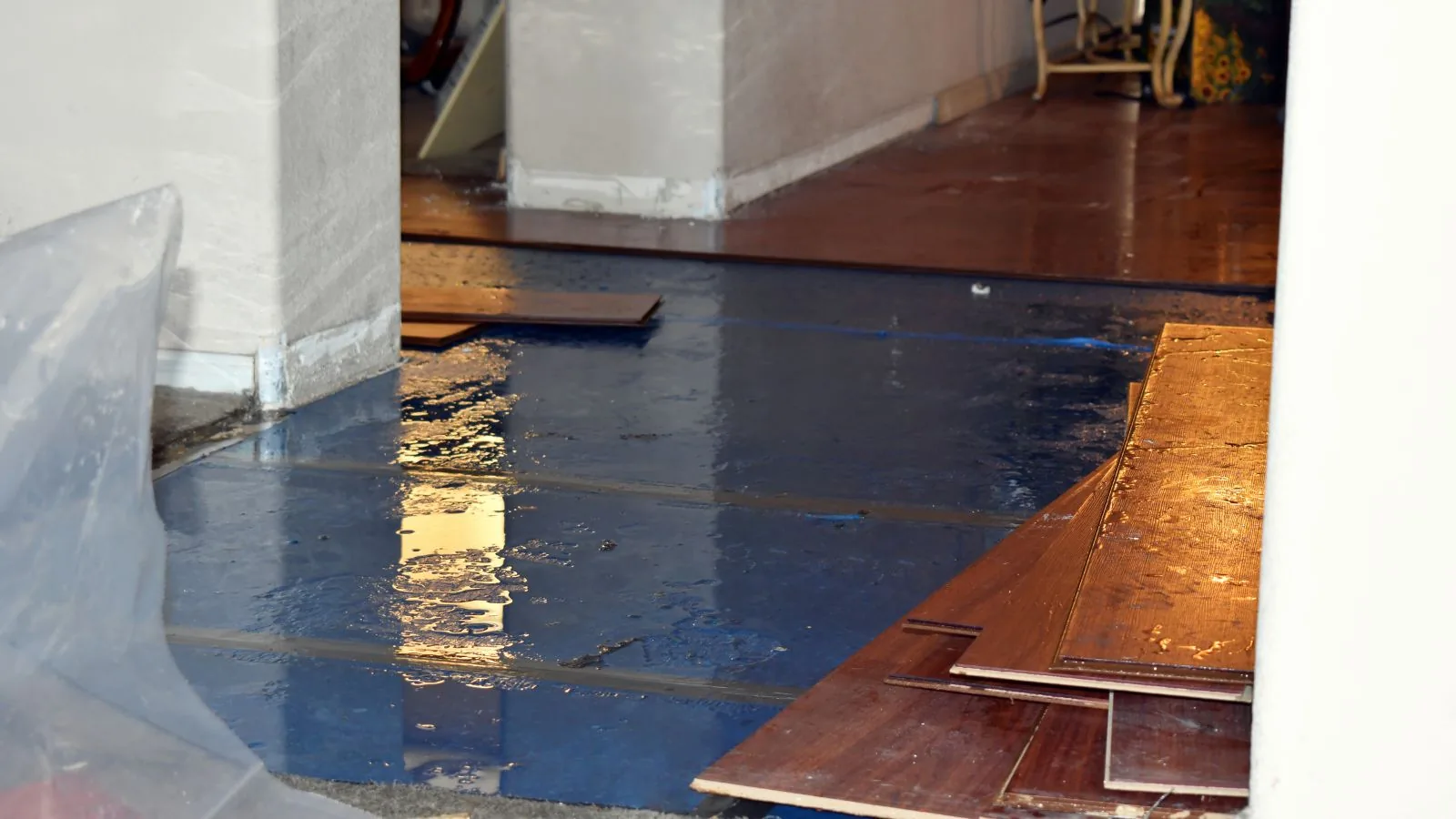
Warning signs that point to a slab leak
Slab leaks hide under concrete, so the first clues are indirect. Look for warm spots on the floor, the sound of running water when everything is off, damp carpet or baseboards, cracks that appear suddenly and a water bill that jumps without explanation.
None of these proves a slab leak by itself, but together they are reason to shut off the main and call a leak detection plumber.
| Symptom | Could also be | What to do |
|---|---|---|
| Warm spot on floor | Heating pipe or sun | Shut off main and check the meter. |
| Running water sound | Toilet or irrigation leak | Listen at each fixture, then call a plumber. |
| Wet carpet at wall base | Wall leak or appliance | Call us for moisture mapping. |
| High water bill | Leak anywhere or higher use | Read the meter with all taps off. |
Slab leak with active water: what to do first
If you see water coming up through the floor or the floor is wet, treat it as an emergency and call our 24/7 line. Shut off the main water valve, keep power off near wet flooring unless the panel is dry and reachable and move valuables off the floor.
A plumber finds and fixes the leak, and we handle extraction, drying and any rebuild. Calling both early is common.
Same-day response is what we work toward when crews are available, including nights and weekends, and the person on the phone will explain what to expect.
How common this is in Romulus homes
Slab leaks affect only homes built on concrete slabs, and many Southeast Michigan homes have basements or crawl spaces instead. Some Romulus houses are slab-on-grade, so we ask about your foundation before assuming.
If your house has a basement, a similar symptom is more likely a leak in the floor above or a drain issue, and we point you to the right page.
How we dry a slab leak loss
Map the moisture
We check flooring, wall bottoms and baseboards to see how far the water has traveled.
Remove wet materials
Carpet, pad and damaged flooring are lifted so the slab surface can breathe.
Dry
Air movers, dehumidifiers and sometimes floor mats dry the slab surface and framing.
Coordinate repair
After the plumber fixes the line, flooring and walls are rebuilt to match.
How a plumber and a restoration team work together
A leak detection plumber uses acoustic listening devices and sometimes thermal imaging to pinpoint the pipe. Repairs may involve opening the slab, rerouting the line above the floor or replacing a section.
We time our work around that. Drying usually starts right away, and rebuild happens after the line is fixed so new flooring is not cut open again.
Standards that guide slab leak drying
ANSI/IICRC S500 is the published standard for professional water damage restoration. For a slab leak it supports measuring moisture in flooring, baseboards and lower walls instead of relying on what the eye can see.
We cite the standard as a guide and not as a claim of certification. Finding and fixing the leak itself belongs to a plumber.
What affects the cost
Cost factors
The cost of drying depends on how long water has been moving, the flooring type and how many rooms are affected. Slab leaks that ran for weeks can mean more flooring replacement.
Leak detection and pipe repair are separate costs from restoration. We explain scope and price before work starts.
Insurance and related services
Policies treat slab leaks differently from sudden pipe breaks, and some limit coverage for access to the pipe, so ask your insurer what applies. Keep the plumber report and photos of the water. See burst pipe cleanup for sudden breaks and carpet water damage restoration for wet carpet.
Questions people ask
Yes. The 24/7 line is open on nights, weekends and holidays. Shut off the main water valve and call so we can plan extraction and drying.
Warm spots on the floor, running water sounds with all fixtures off, damp flooring and a sudden jump in your water bill are the usual clues. A plumber with leak detection equipment confirms it.
No. A plumber finds and repairs the pipe, and we handle the water damage. We can tell you where the moisture is.
Not by itself, since a running toilet or irrigation leak can do the same. Read your meter with all taps off to see if it still moves.
Only if the leak is under it and the plumber must access the pipe, or if materials are too wet to save. We explain which before any cutting.