
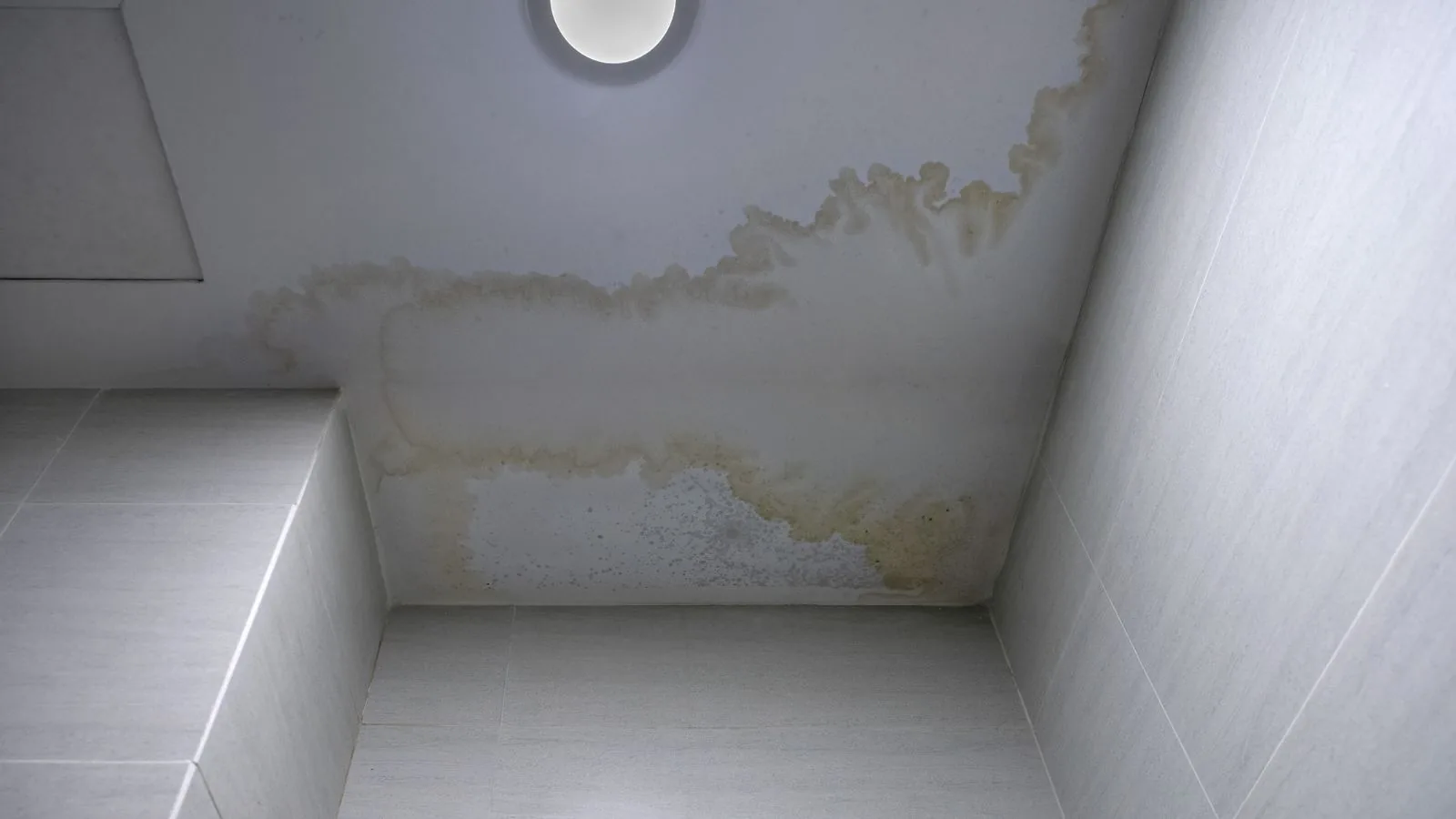
A ceiling that is dripping or bulging is an emergency
If water is dripping from the ceiling or the drywall is bulging, call our 24/7 line now. Keep people out of the room, move furniture and valuables, and place a bucket under the drip.
Do not stand under a sagging section, because wet drywall is heavy and can drop without warning. If light fixtures or outlets are wet, leave power off for that area unless you can reach the panel safely.
Ceiling leaks often show up at night after a storm or in the middle of a weekend. Same-day response is the aim when crews are available, and the person who answers will tell you what to expect.
Finding where the water comes from
Ceiling water has three common sources: a roof leak, a plumbing line or tank above the room, or an AC condensate line. Each calls for a different fix, so the first job is following the moisture with a meter and thermal camera.
Restoration dries and rebuilds the ceiling. Repairing the roof, pipe or condensate line is a separate trade, and we point to the source in our notes so the right person can fix it.
Roof leaks and water that comes through the ceiling
Wind driven rain, lifted shingles, flashing gaps and ice dams all let water into the attic, where it soaks insulation and then drips through the ceiling below. The leak can appear far from the roof entry point because water runs along rafters and wiring before it drops.
If rain is the cause, call your roofer for a temporary cover and keep photos of the stain, the attic and the roof for your insurer. For a bigger storm loss see storm water damage cleanup.
How we dry and rebuild a wet ceiling
Relieve trapped water
We puncture a bulge in a controlled spot so water drains into a container instead of collapsing the panel.
Cut back wet drywall
Damaged board comes out with clean edges, and wet insulation above is removed.
Dry the cavity
Air movers and dehumidifiers dry the joists and the room while readings are logged.
Rebuild the surface
New drywall, texture and paint match the room once the structure is dry.
Ceiling damage by source
| Source | Clue | Who fixes the cause |
|---|---|---|
| Roof leak | Stain grows after rain | Roofer. |
| Plumbing above | Stain appears with no rain | Plumber. |
| AC condensate line | Stain near a vent or air handler | HVAC technician. |
| Ice dam | Stain along an exterior wall in winter | Roofer and insulation contractor. |
Safety around a wet ceiling
Beyond the risk of a falling panel, wet ceilings can hide live wiring and recessed lights. Keep power off to affected fixtures and do not touch dripping wires.
Attic access is also a hazard when insulation is soaked, because wet insulation is heavy and can hide joists. Leave attic inspection to trained crews.
Standards that guide ceiling water damage work
ANSI/IICRC S500 is the published standard for professional water damage restoration, and it covers how wet building materials are assessed and dried. For ceilings it supports the practice of checking above and beside a stain instead of only below it.
We cite the standard to explain the method. It is an industry reference, not a claim that we hold a certificate.
What affects the cost of ceiling repair
Cost factors
Cost follows the size of the damaged area, whether insulation is wet, how high the ceiling is and the finish, such as texture or a popcorn surface. Smaller stains that dry well cost less than a collapsed section.
We explain the scope and price before work starts and break out drying from the rebuild.
Insurance and related services
Insurers look at the cause, so document the stain, the drip and the source before cleanup and describe the loss as water damage. If a line above the ceiling failed, our burst pipe page covers that side, and AC leak water damage covers condensate leaks.
Questions people ask
Yes. The 24/7 line takes calls on nights, weekends and holidays. Move people out from under the stain and tell us how large it is.
It can be, because saturated drywall is heavy and can fall. Keep clear of it, and if it is bulging, call so it can be released safely.
Only if it is safe and you are not under it. A small controlled hole lets water drain, but it is best to call and have us guide you.
Not until the source is fixed and the cavity is dry. Paint over a wet ceiling traps moisture, and stains often return.
No. We handle water removal, drying and the interior rebuild, and we note the roof or plumbing source so the right contractor can fix it.