
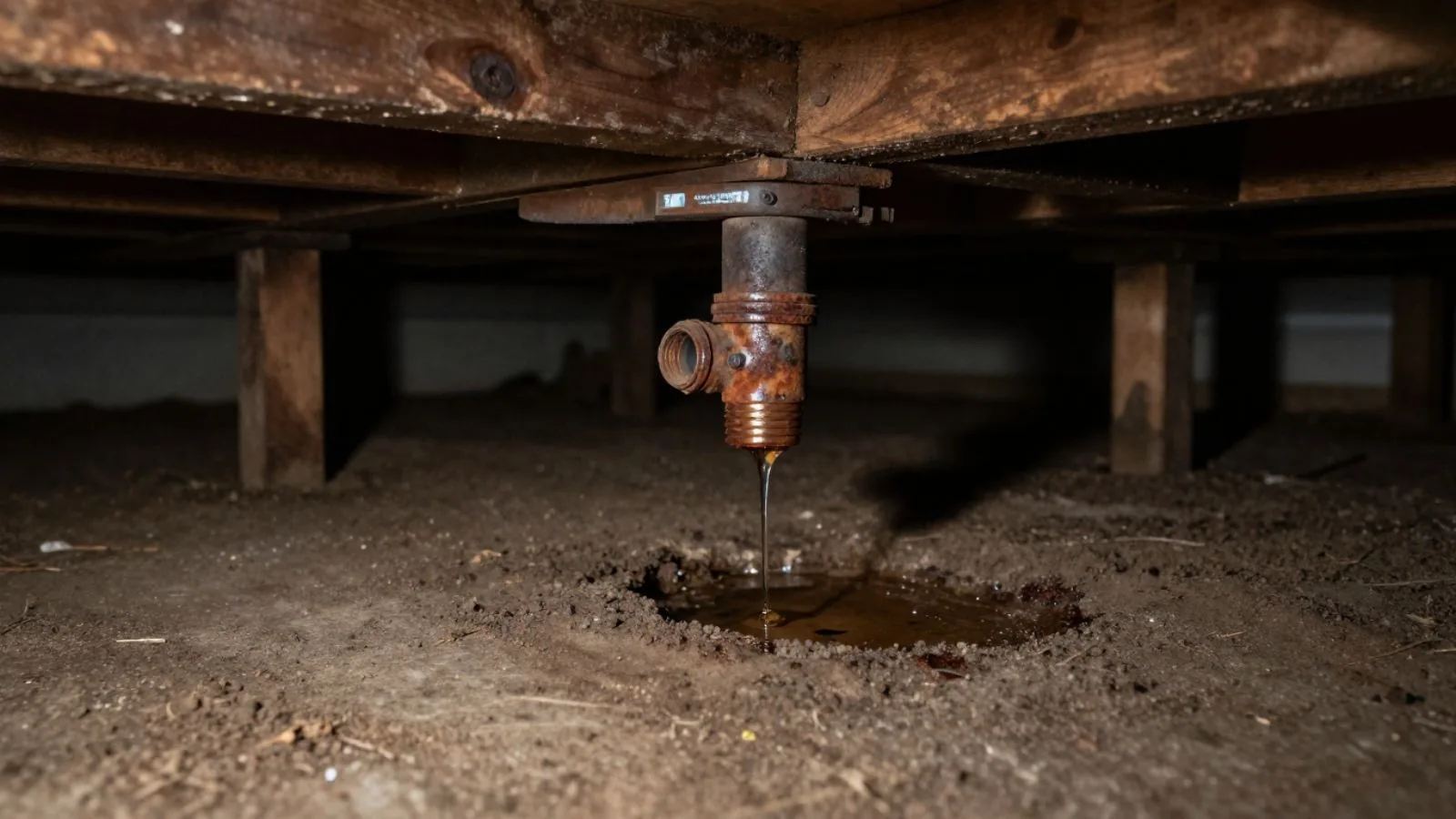
Water under the house, out of sight
A crawl space is a low, enclosed area under part of a house. Water gets in from heavy rain, a high water table, a leaking line or a failed sump pump, and it often sits unnoticed until the floor above feels soft or smells damp.
Not every Romulus home has a crawl space, since many have full basements, and some are built on slabs. If yours does, it is one of the places we check first after a storm.
What we check before entering
| Check | Why it matters |
|---|---|
| Electrical wiring and outlets | Wet wiring can energize standing water. |
| Water depth and source | Rain, plumbing or groundwater need different fixes. |
| Insulation and vapor barrier | Wet material holds moisture against the floor above. |
| Access and air quality | Tight spaces need safe entry and ventilation. |
How we clean and dry a crawl space
Pump the water
Small pumps remove standing water from the low points.
Remove ruined material
Wet batt insulation, loose debris and saturated sections of the vapor barrier come out.
Dry the space
Dehumidifiers and air movers lower humidity and dry joists and subfloor underside.
Check the source
We note drainage or plumbing problems so a plumber or contractor can fix them.
Why moisture under the floor matters upstairs
Wet joists and subfloor can warp flooring above, make floors feel soft and raise humidity in the living space. Hardwood is especially sensitive to moisture from below.
If you notice cupping or a musty smell, check the crawl space before you replace the floor, because the new floor will fail the same way. Our hardwood floor page covers the floor itself.
When it is urgent and when it can be scheduled
A flooded crawl space after a storm or from a running pipe is urgent, and the 24/7 line takes those calls. A slow seep that appears in wet seasons usually allows time to plan, but wet insulation keeps working against the floor, so do not wait weeks.
Signs that water is under the floor
- A musty smell that comes up through floor vents or near the access hatch.
- Floors that feel soft, spongy or uneven in one area.
- Condensation on pipes, ducts or the underside of the floor.
- Pest activity that increases after wet weather.
- A higher indoor humidity reading than usual.
Why drainage and the vapor barrier matter
A vapor barrier is a plastic sheet that covers the soil and limits evaporation into the space. When it is torn, missing or bunched, ground moisture rises more easily and the crawl space stays damp even without a leak.
Cleanup resets the space, but long term dryness depends on drainage and the barrier. We point out what we see so a contractor can quote the fix.
Planning around a tight space
Crawl spaces are low and confined, so work takes longer and equipment is smaller. Crews wear protective gear and check air and wiring before entering.
If the access hatch is blocked by shelving or stored items, moving them ahead of time speeds things up.
The published standard and crawl space moisture
ANSI/IICRC S500 is the published standard for professional water damage restoration, and ANSI/IICRC S520 covers mold remediation. We name both because a wet crawl space can involve either, and each document has its own purpose.
Citing them describes industry references we use as a guide. It is not a statement that we hold a certificate, and we make no health claims about moisture.
What affects the cost
Cost factors
Cost follows crawl space size, water depth, how much insulation and vapor barrier needs replacing and how hard the space is to access. Tight, low spaces take longer to work.
We explain scope and price before work starts.
Insurance and related services
Whether insurance applies depends on the cause, so ask your insurer and describe the loss as water damage. Groundwater and rain seepage are treated differently from a plumbing leak. For heavier water see flood damage restoration, and for the drying step see structural drying.
Questions people ask
Yes, active flooding is taken at any hour on the 24/7 line. Slower seepage can usually be scheduled.
Look for a damp or musty smell, soft floors above, condensation on pipes or visible water through the access hatch. If you are unsure, call and we will explain what to check safely.
We replace damaged barriers as part of cleanup, and we point to drainage or sump issues for a contractor to fix.
Not with water near wiring. Stay out until power is off and the water is gone, and let trained crews work in confined space.
Usually, because wet batt insulation holds water against the floor. Closed-cell foam may be dried in some cases.