
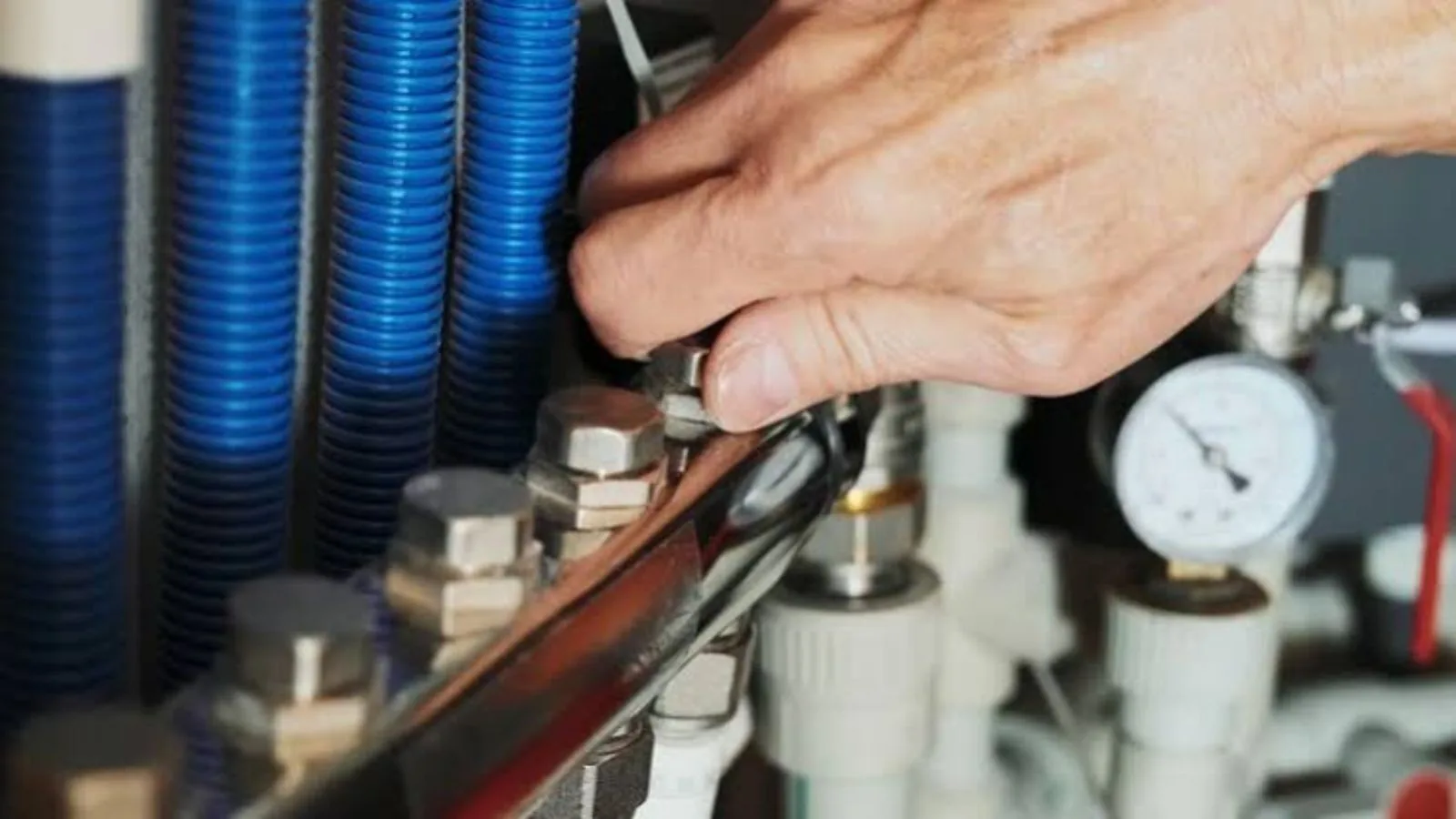
Water heater leaking: first steps
A leaking or ruptured water heater is an emergency, and our 24/7 line is open for it. Turn off the cold water supply valve on top of the tank, switch off the gas or electric supply to the heater if you can reach it safely, and keep out of any room where water touches outlets.
Then call. The tank holds a lot of water, and a failed one can put most of it on the floor at once, so quick extraction limits what the flooring and walls absorb.
Heaters fail on weekends and overnight as often as any other time. Same-day response is what we work toward when crews are available, and the person who answers will tell you what to expect.
Where the water goes when a tank fails
Most heaters sit in a basement corner, a utility closet or a garage, and the water spreads across the lowest nearby floor. In a basement it runs to the floor drain or the lowest point, and in a closet it can soak the wall behind and the room next door.
Finished basement walls and carpet make the loss worse, because wet insulation and carpet pad hold water against the drywall for days if they are not pulled.
How we clean up after a tank leak
Stop and secure
We confirm the supply is off and the heater is not energized, then check for gas or electrical issues with your utility if needed.
Extract
Pumps and extractors remove the water, starting at the deepest point and working outward.
Remove wet materials
Soaked carpet pad, bottom drywall and insulation are cut out where they cannot dry.
Dry and verify
Air movers and dehumidifiers run until moisture readings reach drying goals.
Slow leak or sudden failure
| What you notice | Likely cause | Typical result |
|---|---|---|
| Puddle that grows over days | Leaking fitting or drain valve | Damp flooring, sometimes unseen behind walls. |
| Dripping from the pressure relief line | Pressure or thermal expansion issue | Small leak, but check the valve and call a plumber. |
| Water from the tank base | Corroded tank | Usually needs replacement and can release the full tank. |
| Sudden flood | Tank rupture | Large release across the room. |
What to look at on the heater itself
Check the pressure relief valve and its discharge pipe, the drain valve at the base, the supply connections and the base of the tank. A tank that rusts or drips from the bottom usually cannot be repaired and will need replacement.
A plumber should do any replacement, and we can coordinate timing so extraction happens first.
Industry standard for water heater leaks
ANSI/IICRC S500 is the published standard for professional water damage restoration. A tank failure usually releases clean water that spreads fast across a floor, so the standard guides how we map the wet area and set drying goals.
We cite it as an industry reference for our process. It is not a claim that we hold a certificate.
What to do and what not to do after a tank leak
If it is safe, shut off the cold water supply to the tank and the power or gas to the unit. Do not step into standing water near the heater and do not relight a pilot in a wet room.
Photograph the tank, the label and the wet floor, then call the 24/7 line.
What affects the cost
Cost factors
Cost depends on how much water escaped, how many rooms it reached, whether the floor is carpet, wood or concrete and how much drywall and insulation must come out. A leak caught early costs less than one that ran all night.
Replacing the heater is a plumbing job. We explain scope and price before work starts and keep the restoration scope separate from the plumber.
Insurance and documentation
Policies often treat a sudden tank failure differently from long-term seepage, so ask your insurer what applies and describe the loss as water damage. Photograph the heater, the label with its age and the wet areas, and keep the failed unit if your insurer wants to see it.
Related services
If the water ran into a lower level, see basement water damage cleanup. A tank that fed a plumbing failure upstream may need burst pipe cleanup, and the drying step is covered under structural drying.
Questions people ask
Yes. The 24/7 line takes calls at any hour, including nights, weekends and holidays. Tell us where the heater is and how far the water has spread.
Not if the floor is wet and the heater is energized. Shut off the supply valve and the power or gas only if you can reach them without standing in water, otherwise call us and your utility.
You can replace it, but any water that soaked flooring or walls still needs removal and drying. Skipping that step leaves moisture in the structure.
Tank heaters commonly last about ten years or so, though it varies by model and water. The label on the tank shows the manufacture date.
Often the pad is removed and the carpet is lifted so both can dry. Whether carpet is saved depends on the water category and how long it was wet.