
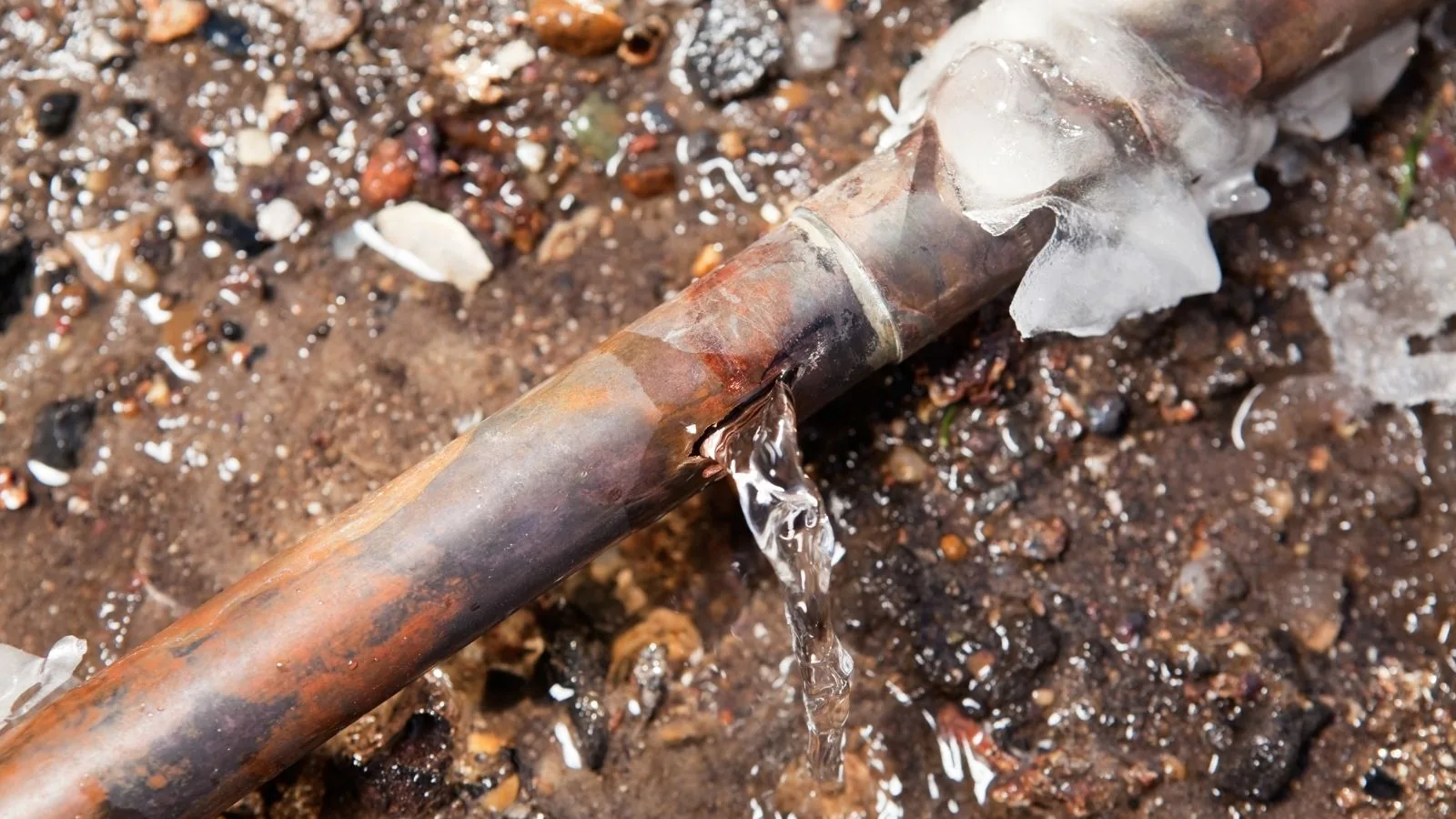
Burst pipe: what to do first
A burst pipe is an emergency, and our 24/7 line is open for it. Find the main shutoff and close it, open a faucet at the lowest point to drain the line, and keep power off in any wet area unless you can reach the panel without standing in water.
Then call. Water from a supply line is clean at first, which is the best case for saving materials, but that window narrows as the water soaks drywall and insulation.
Night and weekend bursts are common because plumbing fails under pressure whenever it fails. Same-day response is the goal when crews are available, and the person who answers will tell you what to expect.
Why a burst pipe does more damage than it looks like
The visible puddle is only part of the story. Water runs down inside the wall cavity, soaks the insulation, drips onto the floor below and travels along joists to rooms you may not have checked.
A pressurized line can release a great deal before anyone notices, especially when the break is in a wall, an attic or a basement ceiling. That is why we scan with a thermal camera and probe with a moisture meter instead of trusting what the surface shows.
How we clean up and dry after a pipe break
Confirm the shutoff
We make sure the supply is closed so the loss is not still growing, and we note where the break is for your plumber.
Extract and open up
Standing water is extracted and wet drywall or ceiling is cut back along clean lines so cavities can dry.
Dry with equipment
Air movers and LGR dehumidifiers run while we log moisture readings each visit.
Hand off to repair
When the structure reaches drying goals the rebuild can start, either with us or your own contractor.
Which pipe failures we see
| Failure | Typical cause | What it means for the job |
|---|---|---|
| Split along a seam | Freezing or pressure | Large release in a short time, often inside a wall. |
| Failed joint or fitting | Age or poor connection | Slow to fast leak that can run for days unseen. |
| Pinhole in copper | Corrosion over time | Small steady spray that soaks one cavity. |
| Supply line to a fixture | Worn connector or hose | Local flooding under a sink, toilet or washer. |
Industry standard behind burst pipe drying
ANSI/IICRC S500 is the published standard for professional water damage restoration. For a burst pipe it guides how we classify the loss by how much of the structure is wet and how long the water has been sitting.
We mention the standard because it explains why drying is measured instead of guessed. It is an industry document, and citing it is not a statement that we hold a certificate.
What affects the cost of burst pipe cleanup
What moves the price
The main drivers are how long the water ran, how many floors it reached, whether ceilings came down and how much drywall and insulation had to be removed. A break found in minutes costs less to dry than one that ran overnight.
Plumbing repair is separate from restoration. We explain our scope and price before work starts and note the break location for whoever fixes the pipe.
Insurance notes for a burst pipe
Sudden pipe discharge is a loss many homeowner policies address, but terms differ, so ask your insurer what applies and tell them it is water damage. Photograph the break, the wet areas and any ruined belongings before cleanup, and keep damaged items until the insurer says otherwise.
If the cause is cold weather
Many breaks in this part of Michigan follow a hard freeze. If the pipe froze and then split, the frozen pipe page explains the thaw and the water that comes after. Leaks that start at a tank connection are covered under water heater leak cleanup, and wet ceilings below the break are handled in ceiling water damage repair.
Questions people ask
Yes. The 24/7 emergency line takes burst pipe calls at any hour, including holidays. We will tell you how to shut off water and protect the room until the next steps are arranged.
It is usually where the water line enters the home, often near the water meter or the front basement wall. If you cannot find it, tell us on the call and we will help you think through where it could be.
Shut off the water first, then call whoever can reach you soonest. A plumber fixes the pipe and we handle the water, drying and rebuild, so many homeowners call both.
Sometimes. If wet insulation or drywall cannot dry in place, we cut back the damaged section, and the moisture readings decide how much. We explain each cut before we make it.
Many jobs take several days, depending on how much water was released and which materials are wet. We measure on each visit and stop when the readings reach drying goals.