
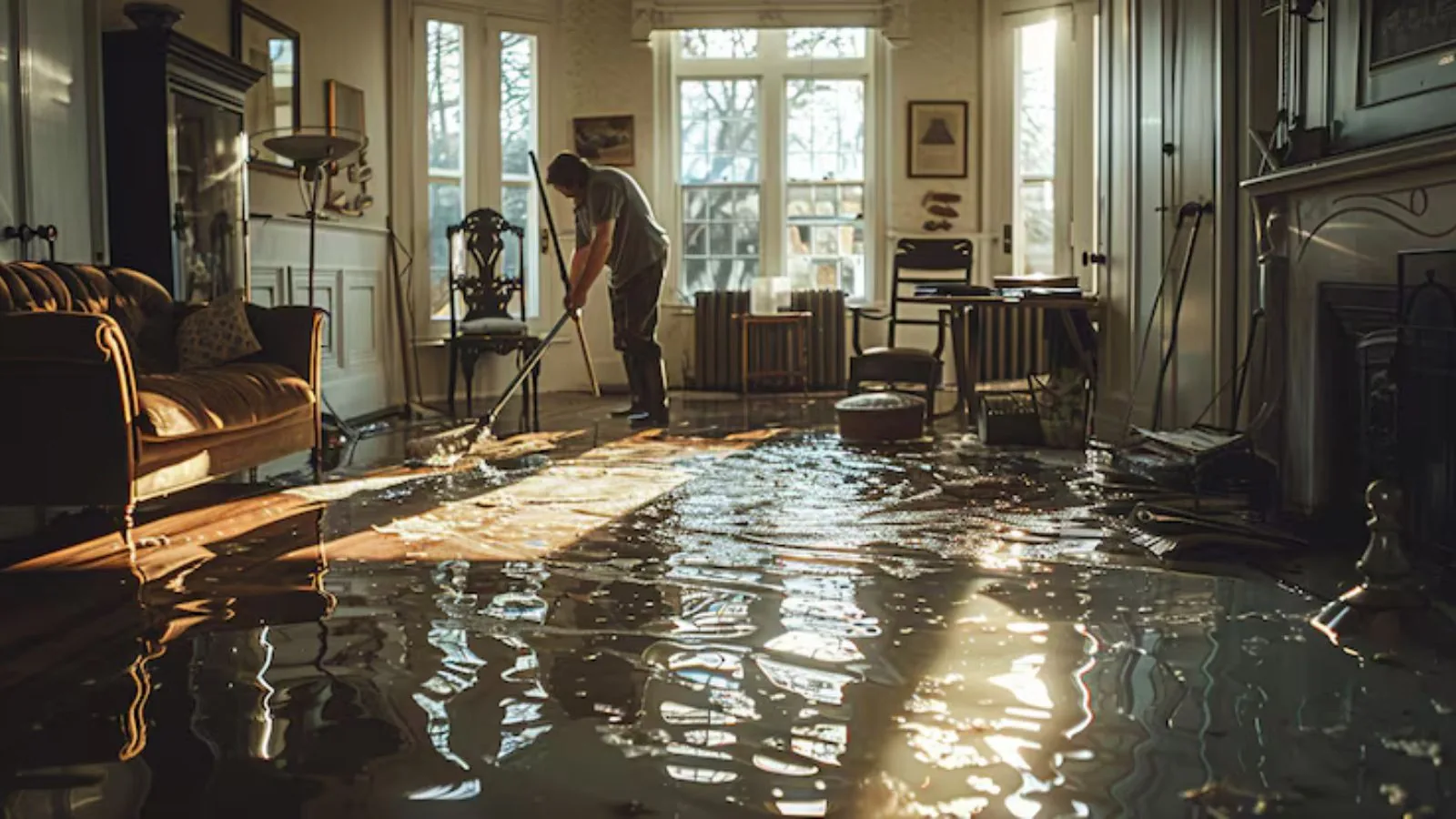
When standing water is an emergency
If water is pooling on your floor right now, treat it as an emergency and call the 24/7 line. While you wait, stop the source if it is safe, keep power off in wet rooms unless the panel is dry and reachable, and lift furniture legs and valuables out of the water.
Water moves quickly into baseboards, carpet pad and the subfloor beneath. Extraction is the step that stops that spread, which is why it comes before any drying equipment goes in.
After hours and weekends are when many of these calls arrive, because burst lines and failed sump pumps do not keep business hours. Same-day response is what we work toward when crews are available, and the person on the phone will tell you what to expect for your address.
What water extraction involves, step by step
Safety check
We look for electrical hazards, slip risks and signs the water is contaminated before anyone enters the room.
Source and spread
We confirm the source is stopped, then map where the water traveled using moisture meters and thermal imaging.
Pump and extract
Submersible pumps clear deep water and truck-mounted or portable extractors pull it from carpet, pad and hard floors.
Remove what cannot dry
Saturated pad, damaged baseboard and soaked insulation come out so they do not hold water against the structure.
Extraction equipment and what each tool does
Different depths and surfaces call for different tools. The table shows the usual match so you know what is being used in your home and why.
| Tool | Best for | Why it is used |
|---|---|---|
| Submersible pump | Water deeper than about an inch | Moves large volume fast so extractors are not overwhelmed. |
| Portable extractor | Carpet, pad and stairs | Pulls water out of fibers and padding without tearing up the room. |
| Truck-mounted extractor | Large areas and commercial floors | Higher suction removes more water per pass. |
| Squeegee and wet vacuum | Hard floors and tight corners | Reaches edges that larger tools cannot. |
| Moisture meter and thermal camera | Checking what is still wet | Shows water hidden behind walls and under flooring. |
Clean, gray or black water: why the category changes the plan
Water is sorted into three categories in the ANSI/IICRC S500 standard that many restoration professionals use as a reference. Category 1 comes from a clean source such as a supply line, category 2 carries some contamination such as a washing machine overflow, and category 3 is grossly contaminated, such as sewage or floodwater.
The category decides how much has to be removed. Clean water may let us save carpet and pad, while contaminated water usually means porous materials are discarded. If the water came up through a drain, read our page on sewage backup cleanup before you touch anything.
What affects the cost of water extraction
Cost factors, no surprises
Price depends on how much water there is, how many rooms it reached, which materials are wet and how long it sat. Category matters too, since contaminated water adds protective steps and disposal.
We explain scope and price before work starts, and the written scope shows what was extracted and what was removed.
Insurance and documentation
Many homeowner policies cover sudden water events but not every cause, so call your insurer early and describe the loss as water damage. We photograph the water, the affected rooms and the removed materials, and our scope lists the work so your adjuster can review it. The coverage decision stays with your insurer.
Where extraction fits with drying and repair
Extraction removes the bulk of the water, but the structure still holds moisture afterward. Most jobs move straight into structural drying, and a pipe failure may also need the burst pipe cleanup steps. After a heavy rain the flood damage restoration page covers what comes in from outside.
Questions people ask
Yes. The emergency line is open 24/7, so night, weekend and holiday calls reach a person. Tell us what you see, and we will explain the safe steps to take while the next ones are arranged.
As soon as it is safe, because water keeps spreading into flooring, baseboards and wall bottoms. The earlier it comes out, the more of the structure can usually be dried in place.
For a small spill of clean water, a wet vacuum helps. For anything deeper, any amount near outlets or any water that may be contaminated, stay out and call so equipment and protective gear are used correctly.
Not always. Carpet and pad that took in clean water can sometimes be dried in place, while contaminated water or long soaking usually means they are removed. We explain the call for each room before cutting anything.
We read moisture in the floor and wall bottoms with a meter and compare to dry reference readings. A surface that feels dry can still hold water inside, so the readings decide.